Eyeing a waterfront home in Fort Lauderdale and wondering if you’ll need a jumbo loan to make it happen? You’re not alone. Many high-end and coastal properties in Broward County exceed standard lending thresholds, which can change how you qualify, what documentation you provide, and how your loan is priced. In this guide, you’ll learn what “jumbo” really means here, how affluent buyers qualify, the rate and term choices you’ll face, and the local insurance and condo factors that can affect your closing. Let’s dive in.
What a jumbo loan means in Broward County
A jumbo mortgage is any loan that exceeds the county’s conforming loan limit set by the Federal Housing Finance Agency. These limits change annually and vary by county, so you should confirm the current figure using the FHFA’s conforming loan limits map before you estimate your financing needs. You can check the latest Broward County threshold on the FHFA site by using the Conforming Loan Limits Map.
Because Fort Lauderdale’s luxury and waterfront homes often list at price points above the conforming limit, jumbo financing is common. The distinction matters because guidelines, documentation, and reserves for jumbo loans can differ from standard conforming loans.
- Verify your county limit: use the FHFA’s Conforming Loan Limits Map to see if your target price will require a jumbo loan. Check the current FHFA limit.
- Review mortgage basics and disclosures with a trusted lender. The Consumer Financial Protection Bureau offers helpful consumer guides. Explore CFPB mortgage resources.
Eligibility at a glance
Every lender sets its own jumbo standards, but common expectations include:
- Credit scores: top pricing often goes to borrowers in the middle to upper 700s, though some programs consider lower scores with stronger down payments or compensating assets.
- Down payment and LTV: many primary-residence programs expect at least 20 percent down. Second homes or specialty programs may ask for 25 to 30 percent or more.
- Debt-to-income (DTI): typical caps are around 43 to 45 percent. With strong reserves and credit, some lenders allow higher.
- Reserves: having 6 to 12 months of principal, interest, taxes, and insurance is common. Larger loans or second homes can require more.
- Appraisal depth: unique waterfront properties can require an additional appraisal or a review due to limited comparable sales.
Documentation high-net-worth borrowers use
Be ready to document income, assets, and liquidity. Requirements vary by program, but you can expect:
- Employed borrowers: 2 years of W-2s, recent pay stubs, and employer verification. Self-employed buyers usually provide 2 years of personal and business tax returns, a year-to-date profit and loss, and balance sheets.
- Assets and liquidity: 60 to 90 days of bank statements, brokerage and retirement statements, and documentation for large deposits or transfers.
- IRS and other verifications: a signed 4506-T for tax transcripts and any relevant legal documents for income counted in qualifying.
- Alternative documentation options: some programs allow 12 to 24 months of bank statements or asset depletion methods that convert liquid assets into qualifying income.
Program types to consider
Jumbo financing comes in several flavors designed for different buyer profiles:
- Conventional jumbo: standard documentation and underwriting with investors outside of Fannie Mae and Freddie Mac.
- Portfolio jumbo: loans that lenders keep on their books with customized terms. These are useful for complex incomes, unique properties, or buyers who value flexible structures.
- Asset-based programs: bank statement and asset depletion qualification methods can help self-employed buyers or those with substantial liquid assets.
- Non-QM and specialty jumbo: allow alternative income documentation, custom amortization, or interest-only features subject to additional risk controls.
- Foreign national programs: available in Florida with larger down payments and additional documentation such as passport, visa, and foreign income verification.
- Condo and HOA specifics: condo approvals can require deeper project reviews, including owner-occupancy ratios and HOA financials. For eligibility references, see Fannie Mae’s condo project guidance and Freddie Mac’s condo resources.
Rate and term choices
Your rate and payment structure should align with your time horizon and liquidity plan.
- 30-year fixed: predictable payments and simpler planning. Typically higher rates than shorter ARMs, but less refinancing risk.
- 15-year fixed: faster principal reduction and a lower rate. Monthly payments are higher, so this is less common for very large balances.
- Adjustable-rate mortgages: 5-, 7-, or 10-year fixed periods can offer lower initial rates if you plan to sell, refinance, or expect higher future income.
- Interest-only options: lower payments during an interest-only period but no principal reduction. Lenders often require stronger reserves and tighter qualifying.
Jumbo pricing can be more sensitive to credit score bands, loan-to-value ratios, and property type. Even small changes in these factors may move your rate, so it pays to compare scenarios. For higher-priced homes, you may also want a longer rate lock to match your closing timeline.
Fort Lauderdale factors that affect approval and cost
Flood and wind insurance
Many areas in Fort Lauderdale fall within FEMA flood zones. If the property is in a mapped flood zone, your lender will require flood insurance. You can review location-specific data on FEMA’s Map Service Center. Search FEMA flood maps.
Hurricane and wind coverage is also a key consideration along the coast. Insurers may request roof, window, and anchoring details for wind mitigation credits. Lenders will require proof of hazard insurance before funding. For statewide insurance guidance and market updates, review the Florida Office of Insurance Regulation.
Plan for these premiums in your debt-to-income and reserve calculations. Jumbo lenders commonly ask for proof of first-year insurance at closing.
Appraisals for unique homes
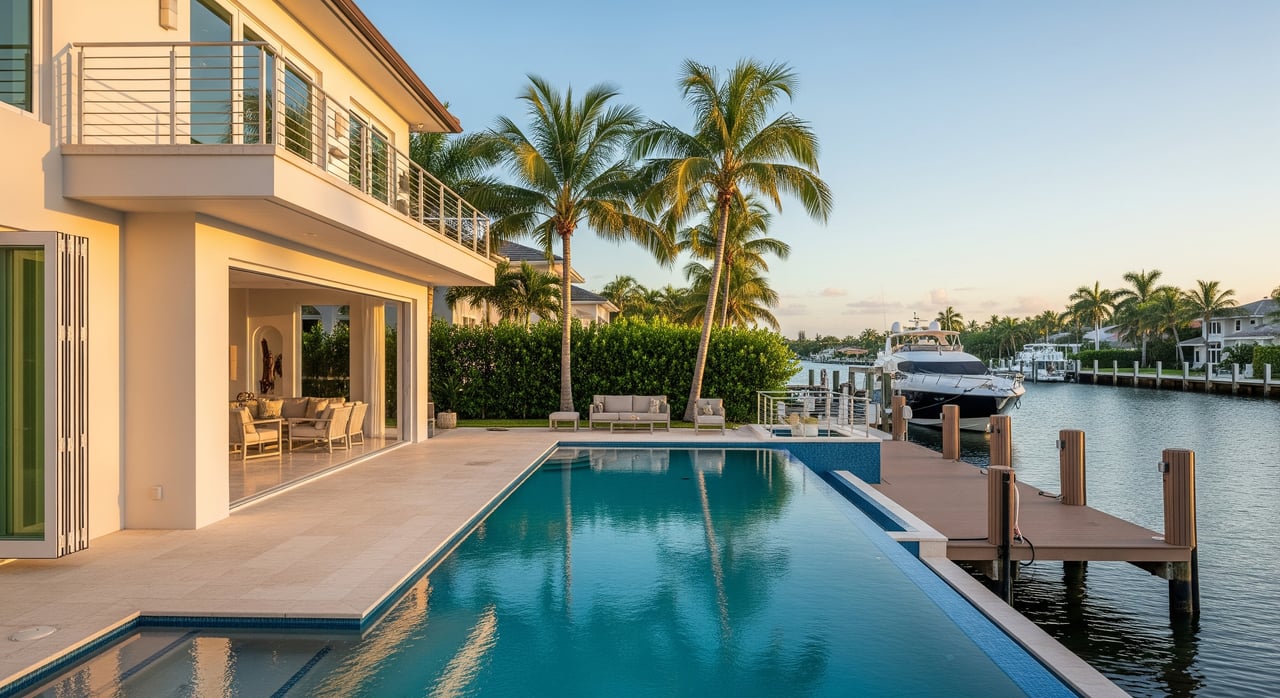
Waterfront and custom properties can be challenging to value because comparable sales are limited. Your lender may require a full interior and exterior appraisal, an appraisal review, or even multiple appraisals in some cases. Build extra time into your closing plan to accommodate this.
Condo and HOA project reviews
Jumbo and agency guidelines often include stricter condo project standards. These can include owner-occupancy ratios, litigation checks, condo budget reviews, and HOA delinquency rates. Ask your lender early about required project documents. To understand common eligibility factors, consult Fannie Mae’s condo project guidance and Freddie Mac’s condo resources.
Property taxes and homestead questions
Florida’s homestead exemption and Save Our Homes benefits apply only to primary residences. This can influence whether you classify your purchase as a primary home or a second home. For Broward County specifics, visit the Broward County Property Appraiser’s homestead page.
Rental limitations and local policy
Short-term rental rules vary by building and neighborhood. Many condos restrict short-term leasing, which can affect any rental income assumptions and loan qualification. Review HOA and municipal rules early in your process.
Cash vs financing on a luxury purchase
There is no one-size-fits-all approach. Consider these tradeoffs and run the numbers with your advisor.
- Reasons to finance: preserve liquidity for investments, renovations, taxes, or future opportunities. Mortgage interest may be deductible depending on current tax law, so consult your tax advisor.
- Reasons to pay all cash: simpler closing, no mortgage interest, and a strong negotiating position in competitive segments.
- Hybrid approach: use a conservative loan-to-value to keep flexibility while strengthening your offer.
Estimate your after-tax mortgage cost against expected returns on your other investments. Include closing costs and insurance premiums common to coastal properties.
Lender questions that save time and money
Ask these questions with two or three lenders to compare terms and timelines:
- Are you offering a conforming or jumbo product for my target purchase price? What is the current FHFA conforming limit for Broward County?
- What credit score bands and loan-to-value tiers change pricing the most for my scenario?
- Which documentation do you require: W-2s, tax returns, bank statements, or asset depletion? What counts as eligible reserves and how many months do you require?
- Do you offer portfolio or asset-based jumbo options? What are the tradeoffs in rate and fees?
- How experienced are your appraisers with Fort Lauderdale waterfront and condo properties? What is your typical appraisal and closing timeline?
- How long can you lock my rate, and what are the fees for 45 to 60 day locks?
- For condos: which project documents do you need and what common issues delay approvals?
- For foreign nationals: what will you require for passports, visas, and foreign income verification?
- Will you accept private flood insurance if required by the property?
- Do your loans include any prepayment provisions I should understand?
Stronger offers with jumbo pre-approval
A fully underwritten pre-approval can help you compete with cash buyers. That means your lender has pulled credit, reviewed your income and assets, and issued a letter listing any remaining conditions. Share current proof of funds for your down payment and reserves, so sellers can see that you are ready to close.
If the market is competitive, talk with your lender about realistic appraisal timelines and lock periods. Tightening your contingency timelines, when prudent, can also improve your offer.
Your jumbo-ready document checklist
Gather these items early to streamline underwriting:
- Government ID: driver’s license or passport and your SSN or ITIN
- Income documents: 2 years of W-2s and personal tax returns; for self-employed buyers, business returns plus a current profit and loss and balance sheet
- Pay stubs: most recent 30 days
- Bank statements: last 2 to 3 months for liquid accounts
- Brokerage and retirement statements: two most recent statements for each
- Proof of funds: dated statements showing funds for your down payment and reserves
- Letters of explanation: for large deposits, credit items, or employment gaps
- Other documents as applicable: divorce decree, child support agreements, leases, and business licenses
Risk management for jumbo closings
- Appraisal gap planning: unique homes may appraise below contract price. Decide in advance whether you will increase your down payment or reduce the loan amount if needed.
- Insurance timing: your lender will require hazard and, where applicable, flood insurance binders before funding. Start quotes early to avoid closing delays.
- Condo project documents: identify required HOA documents early to avoid surprises.
- Rate movement: discuss rate lock windows, potential float-downs, and any available temporary or permanent buydowns.
- Exit strategy: understand prepayment provisions and how you might refinance if rates change or your plans evolve.
Ready to navigate jumbo financing in Fort Lauderdale?
You deserve clear guidance and a smooth path to closing. Our concierge approach helps you align purchase strategy with financing timelines, property-specific risks, and the documentation cadence that luxury transactions require. If you are planning a move or a second-home purchase in Fort Lauderdale, connect with Anthony Romero to put a thoughtful plan in place.
FAQs
What is a jumbo loan in Broward County?
- A jumbo loan is any mortgage above the county’s conforming loan limit. Because limits reset annually, confirm the current Broward figure using the FHFA Conforming Loan Limits Map.
How much down payment is typical for a jumbo in Fort Lauderdale?
- Many primary-residence jumbo programs expect at least 20 percent down. Second homes and specialty programs often require 25 to 30 percent or more, with higher reserves.
Do I need flood or hurricane insurance for waterfront homes?
- If the home is in a FEMA flood zone, lenders will require flood insurance. Coastal properties also need adequate wind or hurricane coverage. Review location risk on the FEMA Map Service Center and statewide insurance guidance from the Florida Office of Insurance Regulation.
Can foreign buyers get jumbo loans in Florida?
- Yes. Programs exist for foreign nationals, though they usually require larger down payments, higher rates, and additional documentation such as passports, visas, and foreign income verification.
Are interest-only jumbo options available?
- Many portfolio and specialty jumbo programs offer interest-only periods. Expect stricter qualifying, higher reserve requirements, and careful review of your exit strategy.
What makes condo jumbo approvals in Broward slower?
- Lenders review condo project health, including budgets, occupancy ratios, and litigation. Early project review helps. See Fannie Mae’s condo project guidance and Freddie Mac’s condo resources for common eligibility factors.